



 Scientific production
 Technical resources and equipment
 Expertise and disciplines
Recent publications
938.
- titre
- Assessing water quality restoration measures in Lake Pampulha (Brazil) through remote sensing imagery
- auteur
- Alexandre Assunção, Talita Silva, Lino de Carvalho, Brigitte Vinçon-Leite
- article
- Environmental Science and Pollution Research, 2025, ⟨10.1007/s11356-025-35914-6⟩
- titre
- Do suspended particles matter for wastewater-based epidemiology?
- auteur
- Gauthier Bernier-Turpin, Régis Moilleron, Chloé Cenik, Fabrice Alliot, Sabrina Guérin-Rechdaoui, Thomas Thiebault
- article
- Water Research, In press, 280, pp.123543. ⟨10.1016/j.watres.2025.123543⟩
- titre
- Plastic debris dataset on the Seine riverbanks: up to 38 000 pre-production plastic pellets reported per square meter
- auteur
- Romain Tramoy, Laurent Colasse, Johnny Gasperi, Bruno Tassin
- article
- Data in Brief, 2025, pp.111735. ⟨10.1016/j.dib.2025.111735⟩
- titre
- La persistance des champs d’épandage d’eaux usées de l’agglomération parisienne au cours du second XXe siècle
- auteur
- Etienne Dufour
- article
- Métropolitiques, 2025, ⟨10.56698/metropolitiques.2174⟩
- titre
- Stock and vertical distribution of microplastics and tire and road wear particles into the soils of a high-traffic roadside biofiltration swale
- auteur
- Max Beaurepaire, Tiago de Oliveira, Johnny Gasperi, Romain Tramoy, Mohamed Saad, Bruno Tassin, Rachid Dris
- article
- Environmental Pollution, 2025, 373, pp.126092. ⟨10.1016/j.envpol.2025.126092⟩
Supervisory authorities


Member of


Theme 3: Functioning and Territorial Management of Receiving Environments
Description
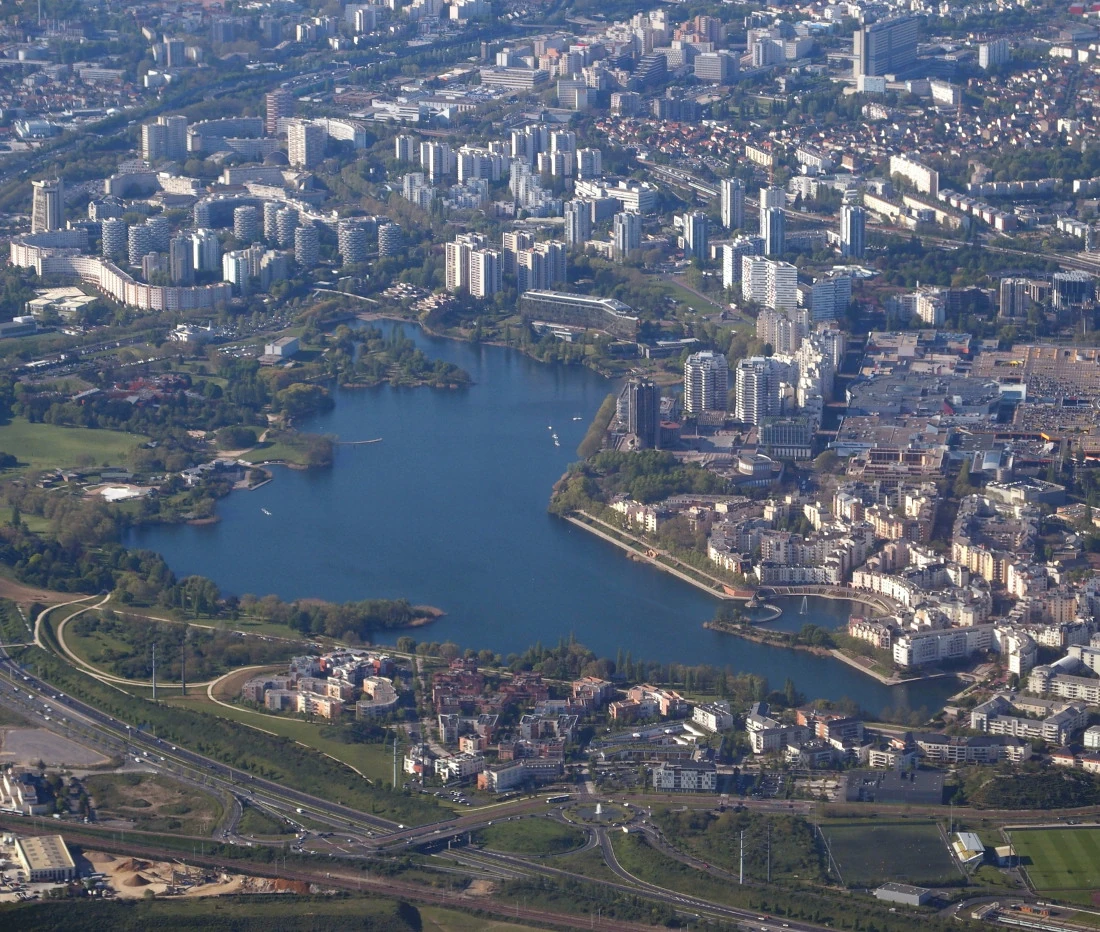
The impact of anthropogenic pressures on receiving environments and the governance of these impacts are central to the research conducted at Leesu under this theme. The studied receiving environments include rivers, water bodies, and urban and peri-urban soils.
Particular attention is given to the evolution of the sanitary and environmental quality of these ecosystems. A unique aspect of the approaches taken is the combined consideration of the physical, biogeochemical, and ecological functioning of the ecosystems studied. In the face of these anthropogenic pressures, the resilience of urban receiving environments becomes a critical question. How will these ecosystems evolve under climate change and increasing anthropogenic pressure? How can they be better preserved? What solutions, and at what scales, can make them resilient? How can research findings be more effectively integrated into ecosystem restoration projects undertaken by operational actors (municipalities, companies, etc.)? What issues of territorial justice are raised by the transformation of these environments?
The objectives of this theme are to:
- evaluate the impact of anthropogenic pressures on receiving environments in metropolitan territories: soils, rivers, and water bodies;
- analyze the evolution of pollutant concentrations and fluxes (organic micropollutants, trace metals, plastics), sanitary quality, and ecosystem functioning;
- develop an integrated approach that considers the hydrodynamic, biogeochemical, ecological, and socio-political functioning of the ecosystems studied.
The theme is composed of several sub-themes:
- Functioning of Urban Aquatic Environments
- Functioning of Urban Soil
- Functioning and Preservation of Built Environment Ecosystems
- Territorial Management of Receiving Environments